S1A Loss of Data & Incomplete S1C/S1D Coverage

Dear ESA / Copernicus Support Team and Community,

I want to report a persistent and ongoing issue with Sentinel-1 data availability that appears to be affecting multiple regions. I hope others in the community have observed the same and that the ESA team can provide clarification or an estimated resolution timeline.


:red_circle: Issue 1 – Sentinel-1A (S1A): Systematic Data Skipping

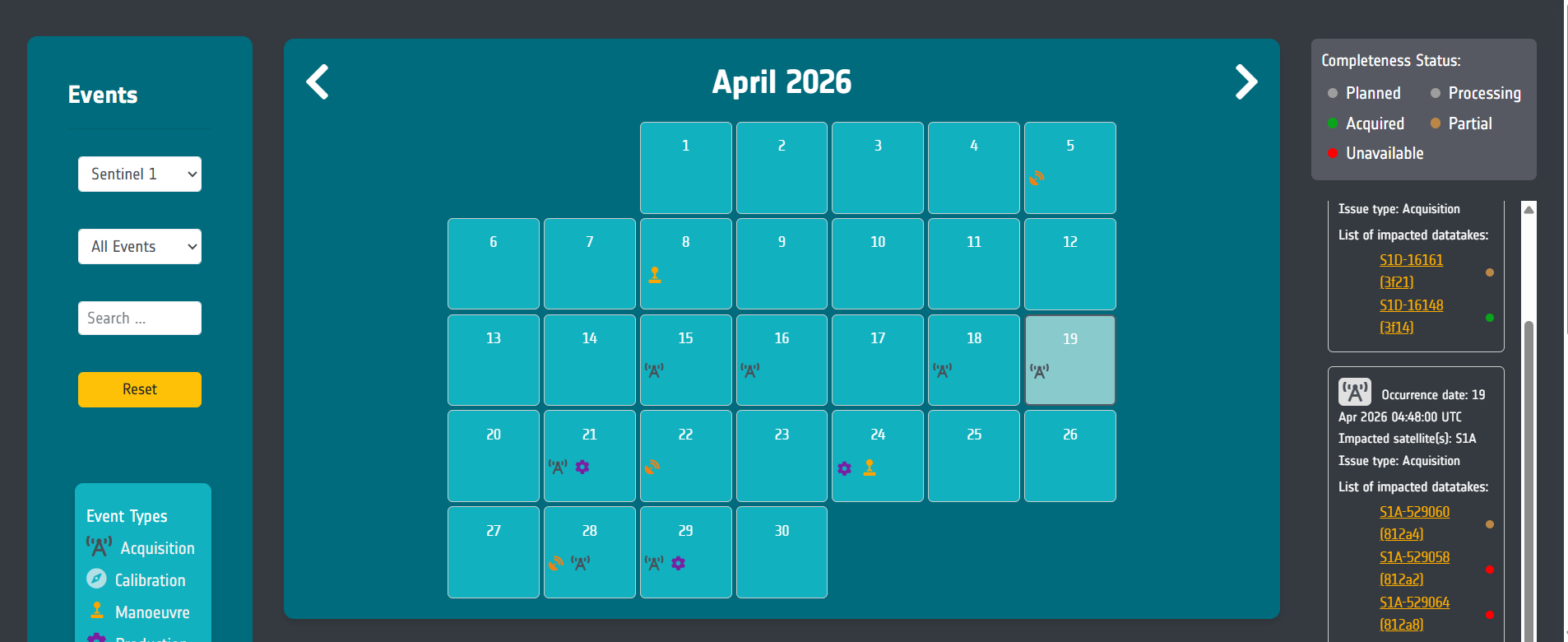
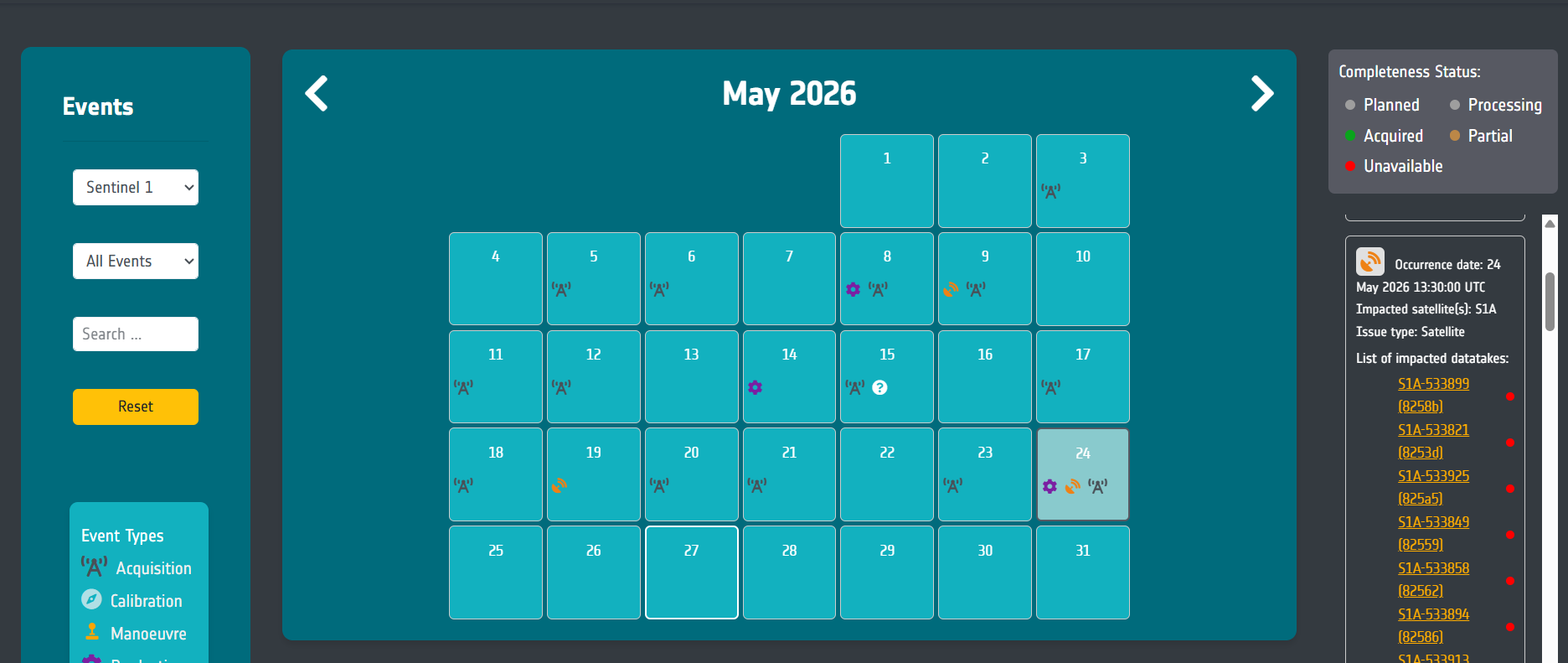
S1A acquisitions have been noticeably patchy in recent times. Scenes expected under the published acquisition plan are either missing entirely or exhibit significant temporal gaps in regions that were previously acquired consistently. This is not isolated to a specific area and appears to be a broader issue with S1A’s current operational status.

  • This is severely impacting time-series analysis and operational monitoring workflows.

Here is the attached Sentiboard Calendar that describes the Issue on Sentinel (ref Here)

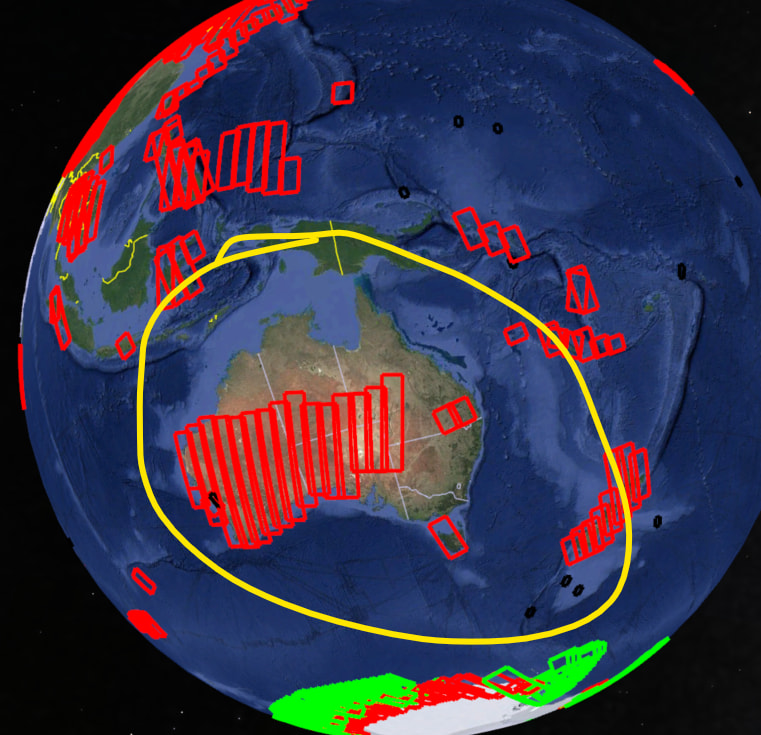
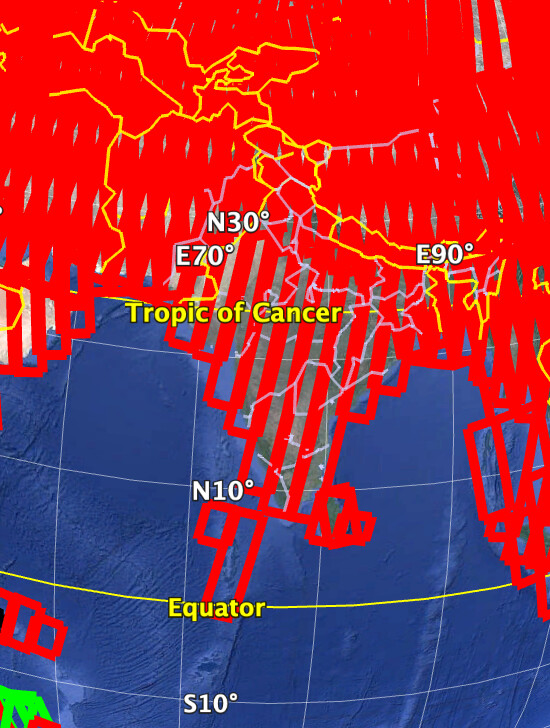
:yellow_circle: Issue 2 – Sentinel-1C (S1C) and Sentinel-1D (S1D): Incomplete Coverage Over India and Australia

S1C and S1D, which were expected to progressively fill coverage gaps left by S1B’s decommission, are currently not providing complete or consistent coverage over India and Australia. Specifically:

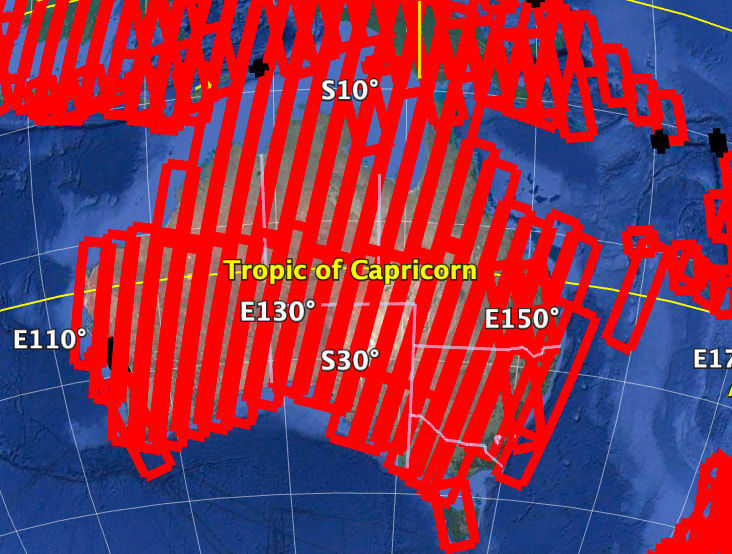
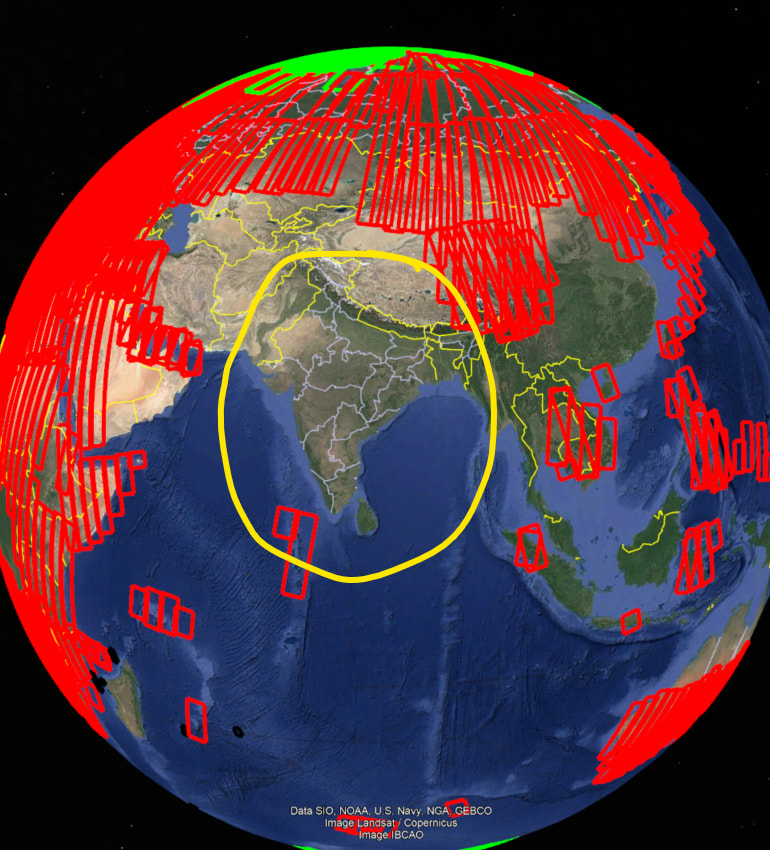
  • Large portions of the Indian subcontinent and Australia are not being systematically covered within expected revisit cycles.
    S1C and S1D Latest Acquisition Segment Extracted from Here

  • It is unclear whether this reflects an ongoing orbit/acquisition plan ramp-up phase, or whether there is an unannounced change to the observation scenario.
:clipboard: Questions for the ESA/Copernicus Team:

  1. Is there a known technical issue with S1A that is causing acquisitions to be skipped? If so, what is the expected recovery timeline?
  2. Are the S1C and S1D acquisition plans for India and Australia still being finalized or expanded? When can we expect full coverage?
  3. Will missing historical acquisitions (due to S1A skips) be retroactively filled once the issue is resolved?

This is severely impacting a wide range of operational and research use-case analysis. Any clarification or interim guidance would be greatly appreciated.

Thank you for your continued support.

Best Regards
Harshal
1 Like

Dear Harshal,

Thank you very much for your interest in the Sentinel-1 mission.

Sentinel-1 is a beautiful system funded by European taxpayers and serving users well beyond Europe. However, to my great regret, it is not a perfect system, and from time to time the satellites could becomes unavailable following anomalies.

This is especially the case for Sentinel-1A, which has been operating for 12 years (much beyond its nominal lifetime) and will end operations on 29th of June.

It is true that Sentinel-1A has experienced several unavailabilities over the last few months. Whether these are related to ageing is difficult to determine, but this will no longer be an issue after 29th of June. (answering point 1)

These outages can sometimes be recovered quickly, depending on when they occur in the day, the complexity of the recovery procedure or the availability of S-band opportunities for commanding the recovery. Unfortunately, the acquisition plan over India is carried out only by Sentinel-1A which can suffer from these outages. During these anomalies, the SAR instrument is unavailable, therefore no data is collected and the missing acquisitions cannot be recovered. (answering point 3)

From the end of June onward, the mission will be carried out by Sentinel-1C and Sentinel-1D only, as already communicated to users, with Sentinel-1D taking over the role of Sentinel-1A.

Therefore, there is no intention to use Sentinel-1C and D to increase sensing capacity over India or Australia. Full coverage will continue to be achieved in a complementary manner using Sentinel-1C and D, as was previously the case with Sentinel-1A and B. (answering point 2). Hence, these areas like most of the areas in the world may be impacted by data loss due system outages. Attached images give the planning of A and C (soon C and D) over the areas you mentioned.

Fortunately, Sentinel-1C and D appear to be more robust and have shown fewer unavailabilities than Sentinel-1A and B. Some outages are still occurring, but they were recovered quickly due to favorable timing. Sentinel-1C and D will also avoid the 20% reduction in sensing capacity during eclipse periods (May to August), which can impact lower-priority regions such as the Asian basin.

We understand the frustration this situation creates and we apologize for the inconvenience. If this level of availability is not acceptable for your application, we invite you to assess the capabilities of Indian national missions such as EOS-4 or the NISAR S-band mission, which will provide wide-area mapping over India and may offer a suitable alternative to improve the resilience of your application.

Best regards,

Nuno Miranda

Sentinel-1 Mission Manager

8 Likes

Thanks for this detailed explanation.

Huge Kudos to the Sentinel team.

2 Likes